Thinking about adding an accessory dwelling unit to your Park Estates home? You are not alone. Many Long Beach homeowners are exploring ADUs to support family, create flexible space, or add rental income. This guide breaks the process into plain English so you understand the rules, your options, and what to do first. Let’s dive in.
ADU basics you should know
California state law sets the baseline for ADUs and Junior ADUs. Cities like Long Beach must follow those rules and can add objective local standards. This matters because most ADUs are approved through a ministerial process, which means no subjective design hearings and generally faster reviews.
You can typically choose from four ADU types: a detached unit, an attached unit, a conversion inside existing space, or a Junior ADU. A JADU is usually up to about 500 square feet within your home. State rules also limit some fees and parking requirements, but you still need to meet building codes, safety standards, and any local procedures.
Can you build in Park Estates?
Most single-family zones can host an ADU under state law, but you should confirm your parcel’s zoning and eligibility with Long Beach Planning and Building & Safety. Ask how many units are allowed on your lot and whether a JADU is also an option. If your home sits in or near a historic overlay, plan for added design review steps.
If you belong to a homeowners association, review your CC&Rs early. HOA rules can limit additions or rentals even if the city allows an ADU. It is smart to check past permits too, especially if you plan to convert an existing garage.
Key rules to verify locally
Local standards shape what is possible on your specific lot. Before you design, confirm the following with the city:
- Maximum ADU size and height for your zone
- Side, rear, and front setbacks, including any reduced setbacks for conversions
- How ADU floor area counts toward lot coverage or FAR
- Parking requirements and exemptions in your area
- Utility and sewer connection requirements, including meter options and capacity
- Permit fees, impact fees, and inspection stages
A quick conversation with the city can save you time and redesign later. Keep notes and request written guidance when possible.
Parking rules, simplified
State law limits how much parking a city can require for ADUs, and many projects qualify for exemptions. Converting existing space often changes how parking is handled, and proximity to public transit can also affect requirements. Long Beach applies these rules within state limits, so confirm whether on-site spaces are needed or if street parking is acceptable for your case.
Five common ADU paths in Park Estates
1) Garage conversion
This option reuses an existing footprint, which can reduce complexity and cost. Confirm that the garage was legally permitted, and ask whether conversion affects required parking on your lot. Plan for structural upgrades, egress windows, and new utility runs. Consider sound control and privacy since garage walls were not built for living space.
2) Detached rear-yard ADU
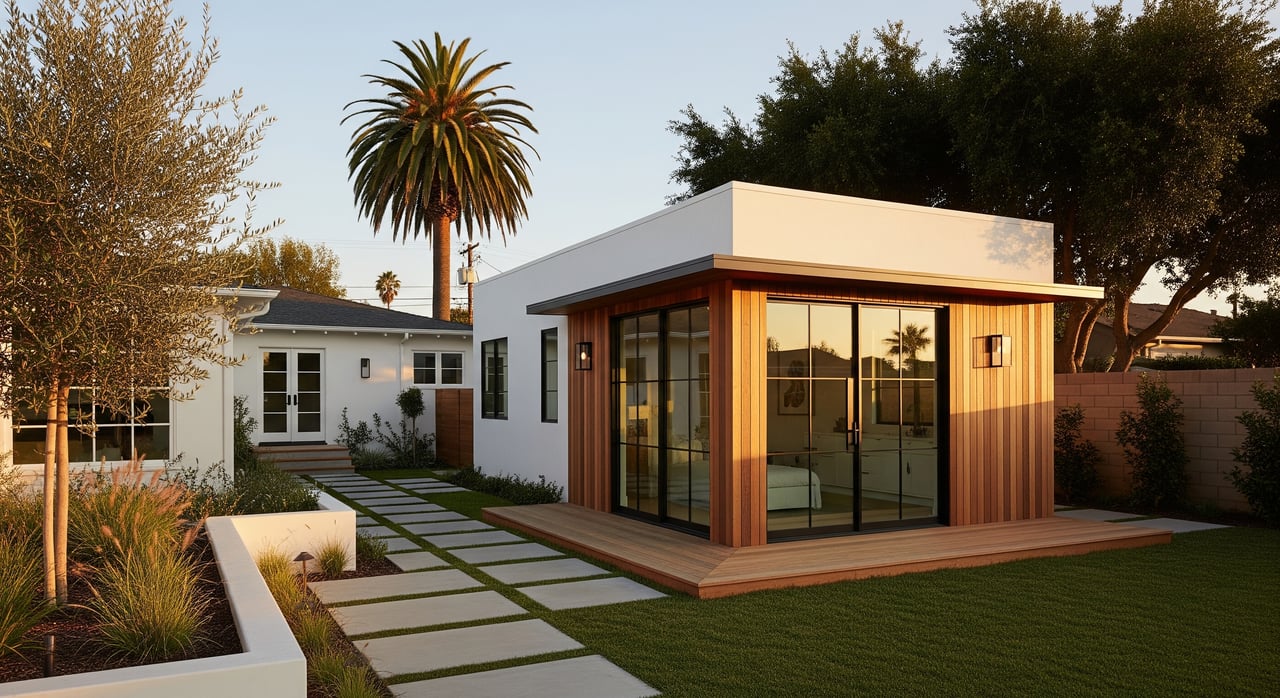
A small cottage behind the main house offers privacy and flexible use. Check rear and side setbacks, height, emergency access, and lot coverage. Think about the path to the unit from the street and how landscaping can support privacy for you and your neighbors.
3) Attached ADU
An attached unit shares at least one wall with the main home. Verify how added floor area interacts with lot coverage and building code requirements for shared walls. Design a separate entrance and plan for sound insulation so the unit functions independently.
4) Junior ADU
A JADU is within your existing single-family home and is typically up to about 500 square feet. It may share some kitchen facilities or include a compact kitchen, depending on local rules. This is often the quickest and lowest-cost path with minimal exterior changes.
5) ADUs on multi-family parcels
If your Park Estates property is multi-family, state rules often allow ADUs within existing buildings and sometimes a limited number of detached ADUs. Confirm the allowed count, location, and parking treatment with Long Beach staff.
Setbacks, height, and lot coverage
Setbacks and height limits keep new structures properly spaced from property lines and neighbors. Many cities allow smaller setbacks for detached ADUs than for new primary homes, but the exact numbers vary. In Park Estates, lot shape, side-yard width, and garage placement often decide whether a rear cottage or a conversion is the smoother path. Ask how ADU square footage is counted against your lot coverage or FAR limits.
Utilities, sewer, and fire safety
Plan early for electricity, water, and sewer connections. Some projects can share meters while others need separate meters. You may need a sewer lateral upgrade or capacity review, which can affect budget and timeline. Expect building code requirements for egress, smoke alarms, and, in some cases, sprinklers. Your designer and contractor can help you map out trenching and connection routes.
What the process looks like
- Pre-application: Confirm zoning, setbacks, and unit count with Long Beach Planning. Ask for any ADU handouts and a fee estimate.
- Design: Hire a designer or architect and define scope, utilities, and site plan. Pre-approved plan sets, if offered, can speed things up.
- Permitting: Submit plans to Building & Safety. Ministerial review is intended to be faster than discretionary review.
- Construction: Schedule inspections at milestones. Garage conversions usually finish sooner than new detached builds.
- Final sign-off: Close permits and secure a certificate of occupancy if required.
Timeline varies by scope, permit queue, and utilities. Plan for weeks to a few months for review, and several months for construction depending on complexity.
Budget drivers to expect
Every project is different, but you can plan around these major cost factors:
- Architectural and engineering design
- Permit, plan check, and impact or connection fees
- Construction scope: conversion versus new detached build
- Utility upgrades, separate meters, and sewer laterals
- Access, landscaping, privacy fencing, and site work
Park Estates scenarios to consider
- Scenario A: Convert an attached or detached garage for a parent. You keep the footprint, add accessible features like wider doorways, and prioritize quick completion. Confirm how conversion affects parking and lot coverage.
- Scenario B: Build a small rear-yard cottage for rental income. Focus on setbacks, height, and privacy. Use landscaping to buffer views and maintain a calm yard experience.
- Scenario C: Create a JADU inside the home. Minimal exterior change and a straightforward permit path. Confirm size and kitchen details with the city.
- Scenario D: On a multi-family parcel, explore multiple ADUs as allowed by state law. Confirm unit count, placement, and parking to avoid redesigns.
Your practical next steps
- Step 1: Gather documents: deed, plot plan, past permits, and any HOA CC&Rs.
- Step 2: Contact Long Beach Planning for a zoning confirmation and ADU checklist.
- Step 3: Choose the ADU type that fits your lot, use, and budget.
- Step 4: Request a written fee estimate and current review timelines.
- Step 5: If you have an HOA, seek approval or legal guidance early.
- Step 6: Engage a designer or architect to draft code-compliant plans.
- Step 7: Apply for permits, schedule inspections, and hire a licensed contractor.
When to bring in the pros
- Early: Speak with city planning staff for zoning and process clarity. If you have CC&Rs, consult HOA counsel.
- Design: Hire an architect or ADU designer, and bring in a structural engineer for conversions that affect framing. A civil engineer can plan sewer and utility runs.
- Construction: Work with a contractor experienced with ADUs in Long Beach.
- Finance and legal: Talk with a lender about financing and a tax advisor about income and property taxes. If you plan to rent, review landlord-tenant rules with a local housing resource or attorney.
Resale and rental considerations
An ADU can improve marketability and create rental income potential. The resale premium depends on design quality, layout, and local demand. Review insurance and lender requirements and confirm how the ADU will be recorded on title. If you plan to rent, learn the local rules that may apply to your unit before listing it.
If you want personalized guidance on how an ADU could impact your Park Estates home value, long-term plans, and timing, reach out for a one-to-one conversation. Connect with Dharmesh Tailor to align your ADU strategy with your property goals.
FAQs
Do Park Estates homeowners need to live on-site to build an ADU?
- State law has largely removed owner-occupancy requirements for ADUs, but you should confirm Long Beach’s current implementation and any lender or HOA rules.
Will my Park Estates ADU require on-site parking?
- Many ADUs qualify for parking exemptions under state law, especially conversions and projects near transit, so verify your parcel’s status and any local conditions with the city.
Can I convert my existing garage to an ADU in Long Beach?
- Often yes if the garage was legally permitted, but you must meet building codes, address setbacks, and handle utilities; confirm parking treatment and any upgrades required.
How big can a Junior ADU be inside my home?
- A JADU is typically up to about 500 square feet within the existing single-family dwelling, with compact kitchen standards; confirm the exact local criteria.
How long does ADU permitting take in Long Beach?
- Ministerial reviews are designed to be faster, but actual timelines vary; ask Building & Safety for current plan check time estimates for your project type.
Are ADUs in Long Beach subject to rent control or special rules?
- Local landlord-tenant and rent regulations can vary by unit type, so check Long Beach’s rules and consult a local housing resource or attorney before renting.